Where a passion and a voice began
At 4-years-old, Hope Morcombe sat transfixed in a theater, watching Disney’s ‘Oceans’. At the time, she was nonverbal, communicating only through American Sign Language, but something about sharks sparked a fascination that would shape her life.
“After that, my mom said the only thing I would sign was the word for sharks,” Morcombe recalled. “From then on, I was committed to sharks. My passion just kept growing.”
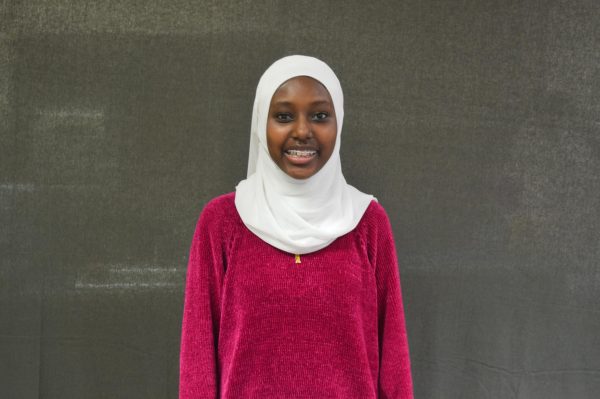
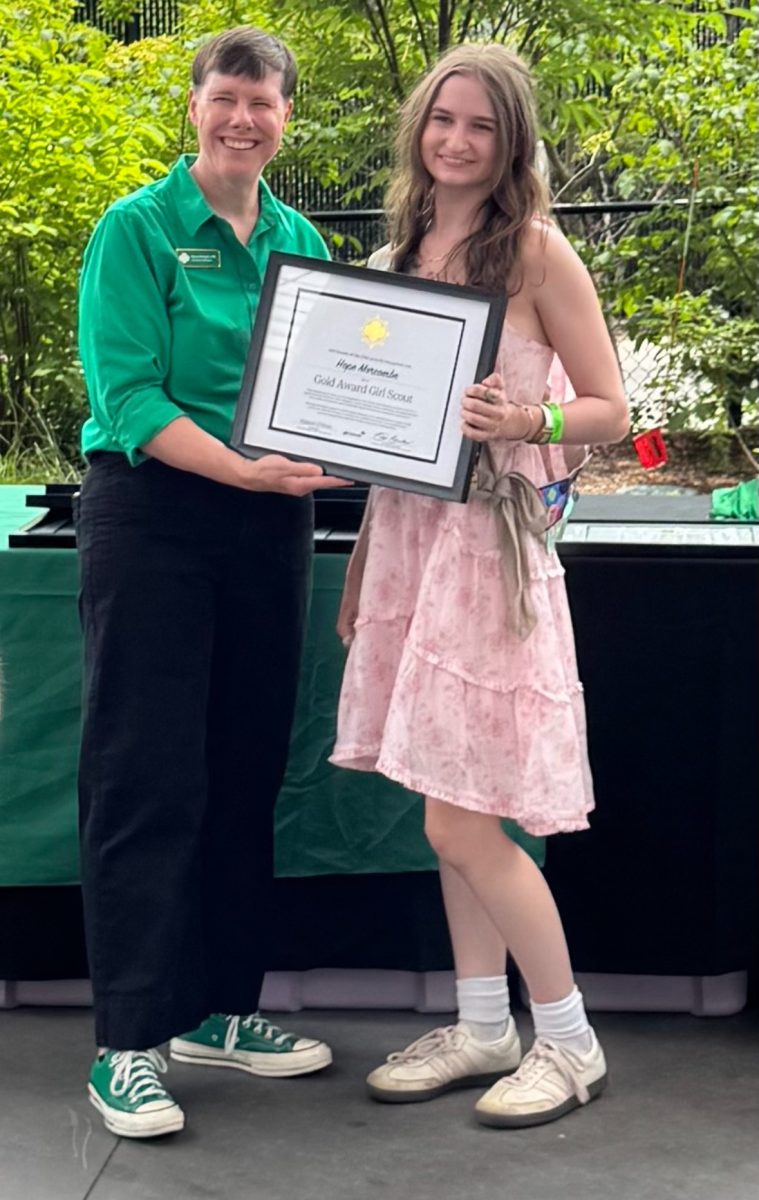
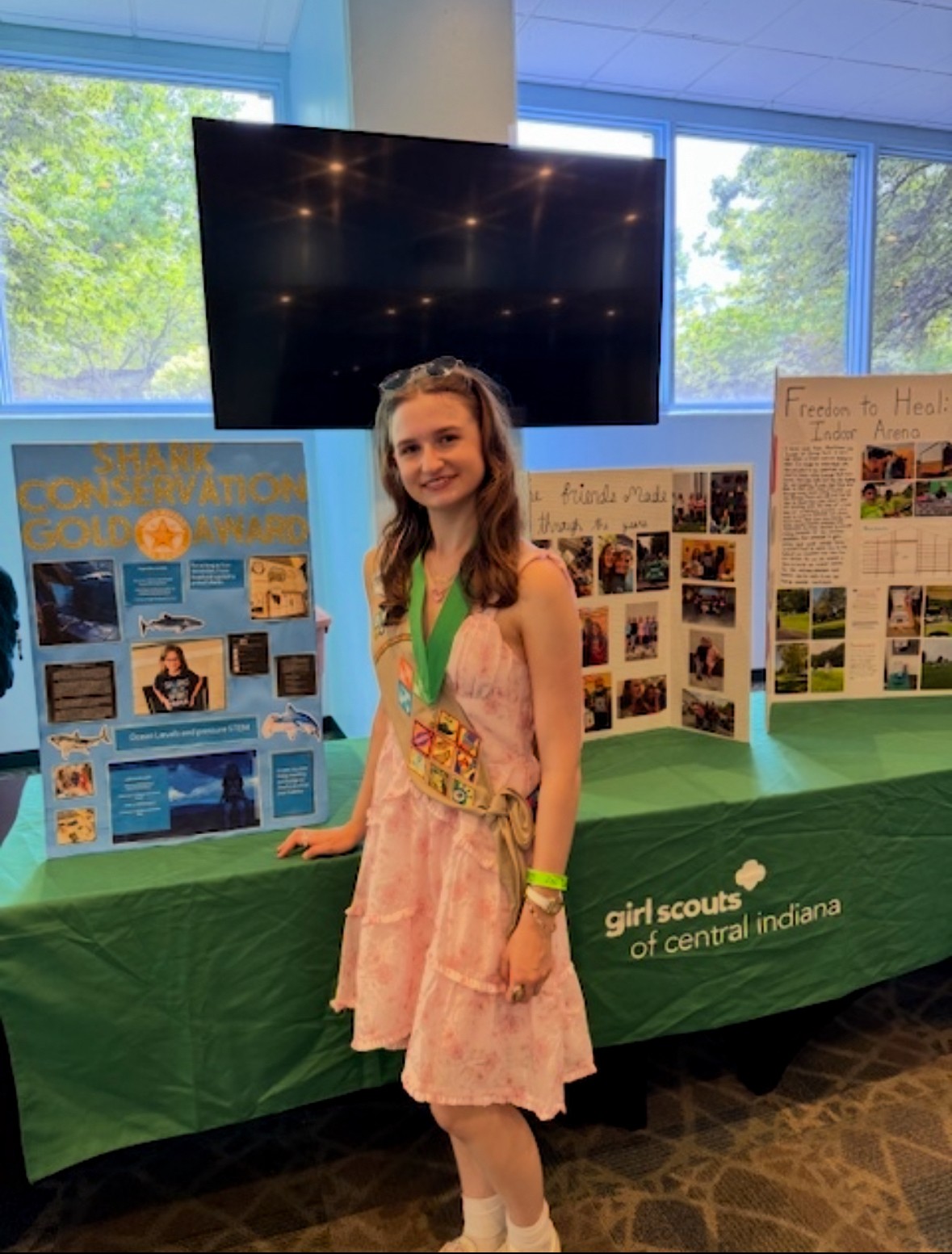
That early fascination became the foundation for a lifetime of achievement. Now, as an 18-year-old high school senior, Morcombe has earned the Girl Scout Gold Award, the organization’s highest honor, for creating a shark conservation curriculum now used by teachers across her school district. Her curriculum teaches students in grades 3–6 about shark anatomy, ecology, endangered species and how humans can be better stewards of the ocean.
“Watching Oceans motivated me to learn how to speak and also to protect sharks in any way I could,” Morcombe said. “I wanted to make sure other kids had access to learning about these animals too, in a fun and educational way.”
Curiosity meets communication
Growing up, Morcombe’s love for sharks shaped both her learning and her resilience. Being nonverbal as a young child presented challenges, but her passion helped her find her voice.
“Sharks gave me motivation. I was able to communicate through ASL, but knowing I could learn and share about sharks pushed me to speak,” Morcombe said.
Her mother encouraged her curiosity, stocking her bookshelf with books on oceanography, sharks and marine life.
“My mom really helped me grow my passion,” Morcombe said. “I just read everything I could find about sharks. That helped me learn so much, and it stuck with me.”
Even when friends or family questioned her fascination, Morcombe stayed focused.
“People would always ask, ‘Why sharks? Why not dolphins?’” Morcombe said. “I don’t know, I just always found them fascinating. They’re misunderstood, and I wanted to change that narrative.”
Girl Scouts: Learning leadership through service
Morcombe’s journey through Girl Scouts began nearly 13 years ago and became a key part of her growth. She earned her Bronze Award by creating an allergy-awareness sign for an elementary school and her Silver Award by helping build a nationally registered monarch butterfly waystation on school grounds.
“Each award taught me something different,” Morcombe said. “By the time I got to the Gold Award, I felt ready to take on a bigger project that could have a lasting impact.”
Her troop, led by her mother, focused on volunteering.
“We did food baskets for the Fraternal Order of Police, helped at the Humane Society and even went hiking to identify local species,” Morcombe said. “Those experiences opened doors for me and showed me how much a small action can make a difference.”
One of her favorite memories was organizing a holiday food drive.
“We spent hours packaging food baskets for families,” Morcombe said. “It felt amazing to see the gratitude on their faces. That was one of the first times I realized volunteering could really change someone’s life.”
Through Girl Scouts, Morcombe learned the value of leadership, independence and persistence, lessons that would later shape her Gold Award project.
The Gold Award: Teaching sharks and conservation
For her Gold Award, Morcombe chose education as her method for conservation.
“When I was younger, there weren’t streamlined ways to learn about sharks in school,” she said. “I wanted students to understand them, to know they’re not as scary as they seem and to learn how to help protect them.”
The curriculum, now housed on a district digital platform, includes lessons on shark anatomy, species diversity, ocean ecosystems, myths about sharks and even hands-on STEM projects.
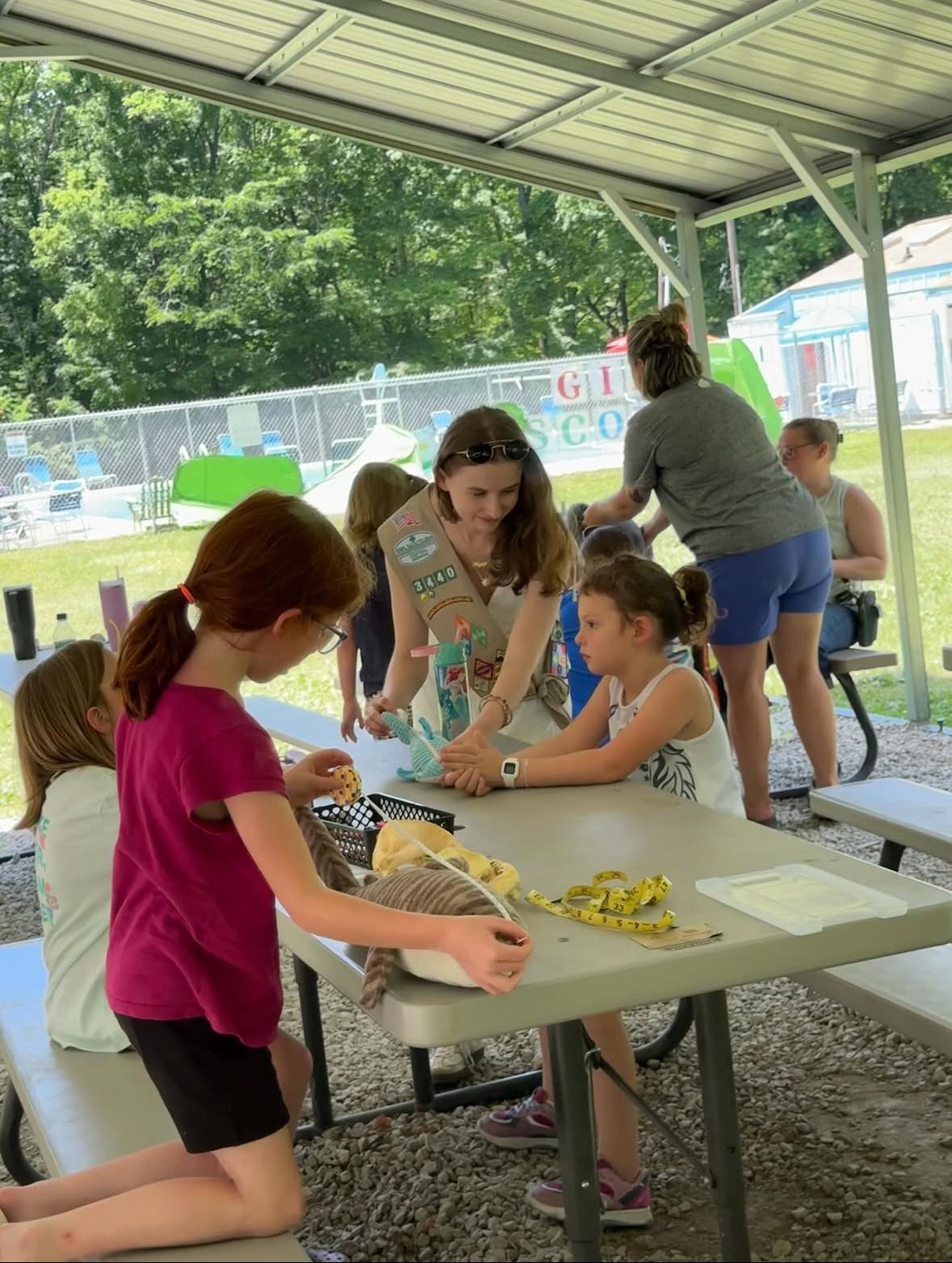
“For one STEM project, students can see how ocean depth affects sharks,” Morcombe explained. “We drop marbles of different weights in water to show how different species adapt. Kids get to read about anatomy, ecology and behavior in a way that’s age-appropriate and fun.”
The work was not easy. The Gold Award application took three months, and her first submission was declined.
“It was tough,” Morcombe admitted. “I’m a perfectionist, so having to revise and improve it was hard, but I kept my long-term goal in mind. I knew it would be worth it.”
Collaborating with mentors, including her district’s assistant superintendent and her oceanography teacher, Morcombe ensured her curriculum was scientifically accurate and sustainable.
“It feels surreal to know my work will be used for years,” Morcombe said. “Something that started as a personal passion can now help thousands of kids learn about sharks.”
A summer internship that feels like a documentary
Morcombe’s curiosity and initiative also earned her a remote research internship at Florida International University. She works with a team studying permit fish in the Florida Keys, tracking species interactions using ocean camera footage.
“I watch and annotate videos, counting species and observing their behavior,” she said. “It feels like I grew up watching documentaries, and now I’m part of one.”
She even had thrilling encounters with sharks in the wild, including a great hammerhead breaching out of the water chasing a fish.
“It was incredible,” Morcombe said. “Like something out of a documentary, seeing them in their natural habitat, moving with so much power, was unforgettable.”
Being the only high school student on a professional research team is both challenging and inspiring.
“It feels kind of weird at first,” Morcombe admitted. “But I know I’m making my mark. I’m learning so much and preparing for my future.”
Education as a tool for change
Morcombe emphasizes that learning is the first step toward conservation.
“Even though I’m in a landlocked state, I can still make a difference,” she said. “Small actions can have a big impact. Learning about marine life, educating others, volunteering, all of that matters.”
Her curriculum reflects that philosophy, teaching students that understanding replaces fear.
“The more you learn about something you’re scared of, the less scared you are,” Morcombe said.
Looking ahead: Marine biology, research and advocacy
Morcombe plans to study molecular or microbiology in college, then pursue a master’s in marine biology, specializing in sharks and rays.
“I want to actively help the ocean,” Morcombe said. “Whether through research, conservation projects or educating others, I want to make an impact.”
Her advice to students chasing big goals is simple: “Go for it. Even if your dream doesn’t directly line up with your major or career at first, work toward it. Take classes, volunteer, learn as much as you can, you can get there.”
Reflecting on her journey, Morcombe emphasizes the lessons sharks have taught her: “Sharks taught me so much more than just science, they taught me persistence, curiosity and courage. I hope other kids can find something that inspires them the same way.”