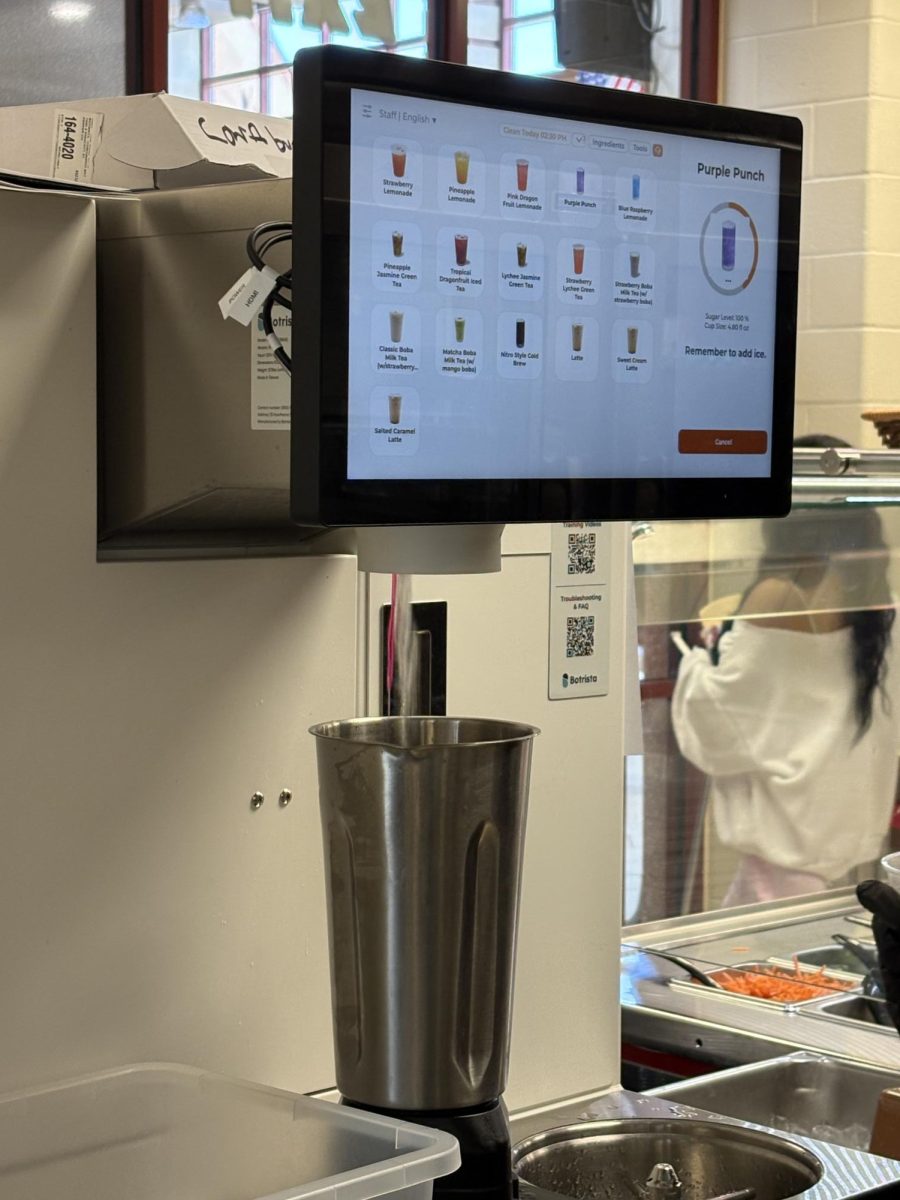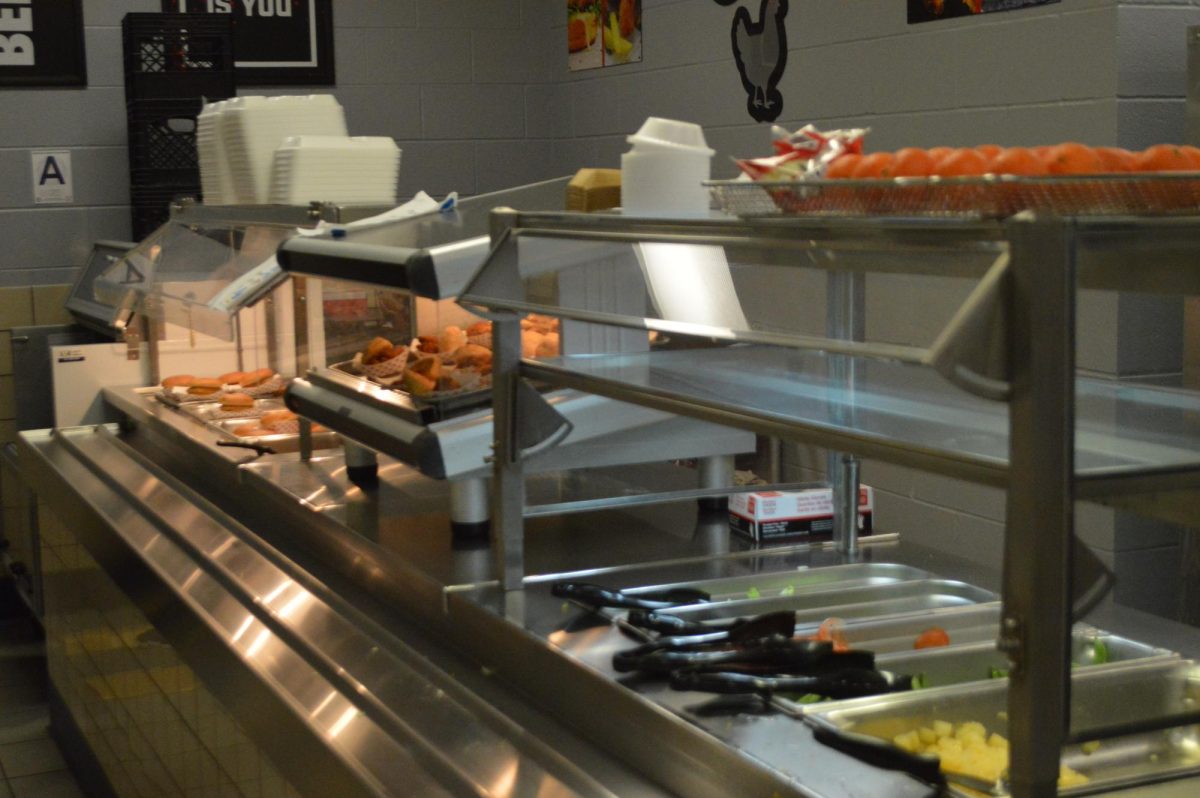
Fishers High School offers many different food options. While all students are somewhat aware that the food they are able to consume in school is selected for them by people in power, the process and the rules that schools must follow regarding food are extensive and rarely talked about. Students often value nutrition, but food choices in school are not normally understood to be as thoroughly regulated and curated as they are.
Beyond just the lunches served here at FHS, there are areas where snacks are available for purchase: the Tiger Bites snack shop and the vending machines.
Entrepreneurship teacher, Jeremy Guler, runs both institutions with the help of his students.
“There are students in my entrepreneurship classes that are in charge of restocking,” Guler said. “We have mobile racks with snacks and drinks that are rolled out of the snack shop to the vending machines,”
However, he cannot just buy what public opinion sways him towards, even though he operates these snack hubs.
“Students and staff can request items, but only the items that are available for purchase from our vendors can be sold in the machines,” Guler said. “We also use Gordon Food Service for snacks and some drinks.”
Gordon Food Service is a bulk food-ordering service for certain businesses (and schools) that want to sell or use snacks and ingredients. According to the website for Gordon Food Service (GFS) they have “delivered the excellence, expertise, and quality products our customers need to design successful food operations and experiences.”
When it comes to regulations with the food in the vending machines, both Guler and those who order the snacks for the lunch line must follow certain rules.
“We are required to sell the same items that are sold in the cafeteria,” Guler said. “We order from the same companies [the cafeteria] does and all of our snacks and drinks have to be Smart Snack compliant.”
Smart Snack compliance is a system federally enforced by the U.S. Department of Agriculture (USDA) that is used to determine the nutritional status of certain “a la carte” foods. There is an online calculator available, and if a certain food does not pass, it cannot be separately sold in schools.
Director of Food Services for HSE schools Karen Ogden explains the Smart Snack guidelines.
“Smart Snacks standards require snacks be whole grain–rich, or have fruits, vegetables, dairy, or protein as the first ingredient,” Ogden said. “[These guidelines] meet limits for calories, sodium total fat, saturated fat and added sugars.”
Acts passed by Congress on the federal level have not just affected a la carte snacks, but school-served breakfast and lunch as well.
“At the federal level, the USDA oversees school food through laws passed by Congress, mainly the Healthy, Hunger-Free Kids Act (HHFKA) and the National School Lunch Act,” Ogden said.
The HHFKA Act and the National School Lunch Act established both new regulations on food in schools and the opportunity for eligible families to be granted free breakfast and lunch.
“Schools that participate in the National School Lunch Program (NSLP) and the School Breakfast Program (SBP) must follow USDA meal pattern requirements,” Ogden said. “[These requirements] specify required food groups, limits on calories, saturated fat, and sodium. [The regulations also] enforce the elimination of trans fats.”
The entirety of the HSE school district participates in both of these programs, which means that certain families are able to allow their students to get free meals at school. This also means that FHS (along with the rest of the district) must follow these nutritional guidelines placed by the USDA in the school building with the lunch and breakfast they serve.
While foods have to be approved nutritionally, they are also screened for taste before being put on the school menu.
“We participate in focus groups with the students and offer taste tests before putting a new item on the menu,” Ogden said. “We test recipes and have a panel that evaluates them for taste and acceptability.”
FHS Cafeteria Manager Katherine Greenwood also understands that taste is a big component of food in school.
“I do sometimes wish we could season a little more or use some full fat items just for the extra flavor,” Greenwood said. “However, I understand nutritionally why this is restricted, and we try to be as creative as we can with salt and fat free alternatives within the guidelines provided.”
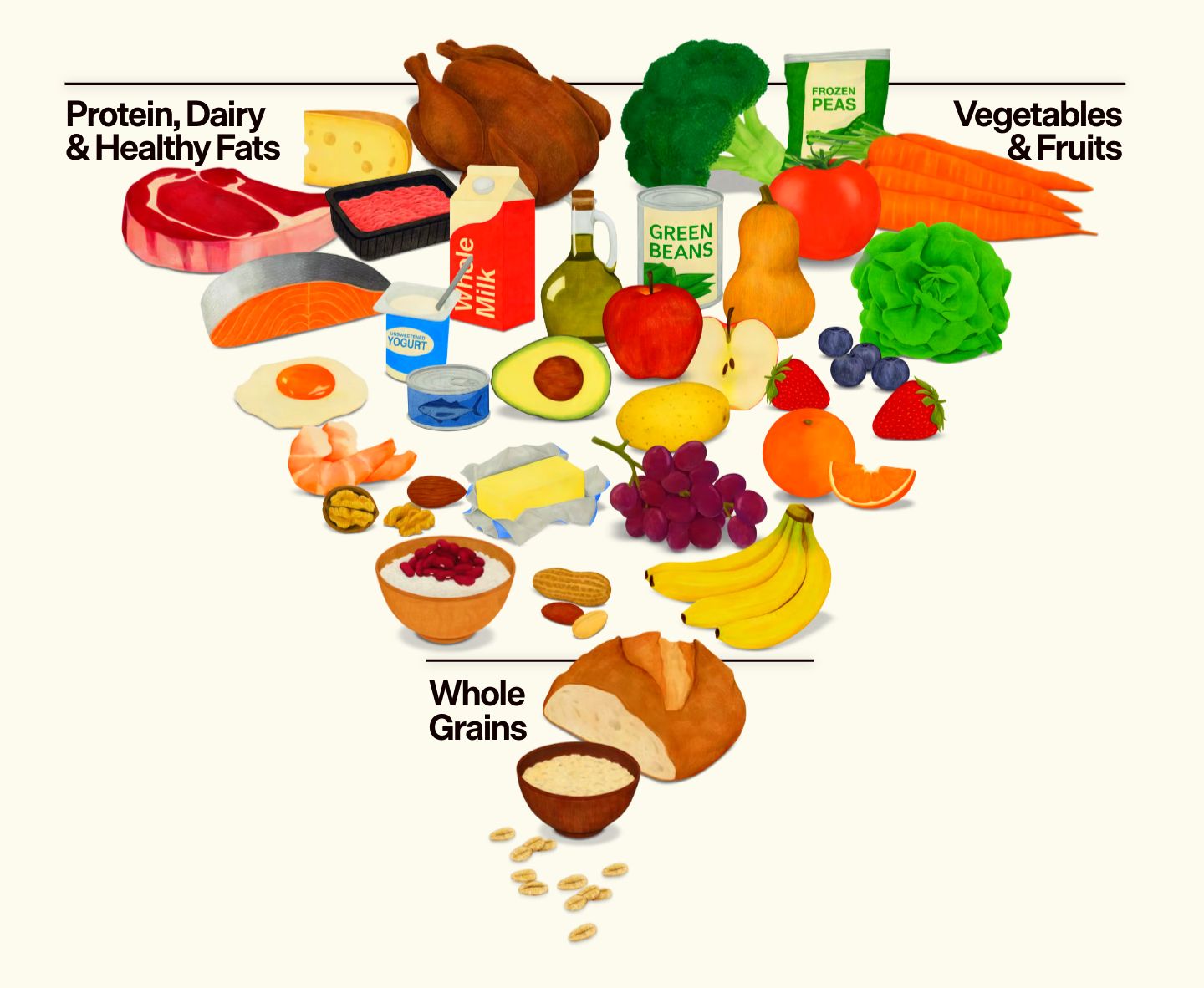
Federal guidelines lean towards being healthier, and to be accurate, outside reputable resources are often considered. Most recently, the government rebranding of the food pyramid to an inverted triangle has seemed to reshape nutrition and, in the future, could reshape food policy in school as well.
“The principles behind the ‘new pyramid’ directly influence USDA school breakfast and lunch standards and Smart Snack Guidelines for competitive foods,” Ogden said. “[The new food pyramid] signals a shift from what students can’t eat to what they should eat more of. In schools, this means healthier, more balanced meals.”
Greenwood understands that shifts may be made as well.
“I have recently read a couple articles with concerns regarding the increase in food cost for schools to implement the changes,” Greenwood said. “Since the [food pyramid] change is on a federal level, all schools would be required to follow suit.”
Greenwood is also worried about the future that this new food pyramid might bring to food in schools.
“With food costs already soaring and school food budgets being very small, I worry about how we can adapt to that without sacrificing quality or the choices that we offer,” Greenwood said. “I would also hope it would not influence the overall cost of a school lunch as that will negatively affect the students and their families.”
For the HSE school district, and more specifically FHS, food regulations and guidelines heavily impact what students can consume in the school day. Without these rules, nutritional value would be lower than it is now. Nutritional staff at FHS and the district want to balance the needs of both the state and federal government and also allow for students to eat and consume tasty food as well. Without these regulations and the guidance and effort of these officials, food in schools would not be what it is today.