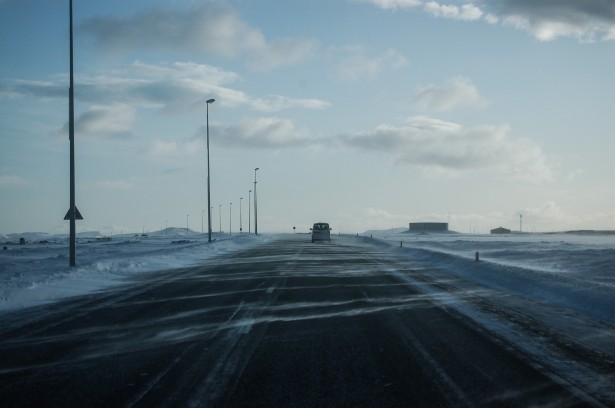
Winter weather can bring excitement, but while driving on winter roads, familiar routines can turn into serious risks. Thin layers of ice, especially on neighborhood streets and at intersections, can make stopping unpredictable and even experienced drivers vulnerable within seconds.
For seniors Alex and Luke Stringfield, that reality became clear during an icy drive in November. What began as a routine trip quickly changed when their car began to slide as they attempted to slow to a stop near Billericay Park.
Luke lost control faster than he expected. The car did not respond the way it normally would and the distance they thought they had to stop disappeared almost instantly.
“You don’t think an accident is going to happen until it does,” Luke said. “It all happened so fast.”
Their car collided with the vehicle in front of them. While no one was seriously injured, the damage was significant, and the experience left a lasting impact. The fear did not stop when the car did.
“I thought the car was going to catch on fire,” Alex said. “Afterward, I couldn’t stop thinking about it.”
The emotional aftermath lasted far longer than the accident itself. Alex said the stress and frustration followed her for weeks, fueled by the feeling that the crash was unavoidable.
“That’s your car,” Luke said. “And it’s something you can’t take back.”
Experiences like theirs are common during winter months, according to driving instructor Jeremy Guler, who said many accidents stem from drivers underestimating how different winter roads can be.
“One road might be totally fine, and the next one is a mess,” Guler said. “People don’t always adjust for that.”
Guler said stopping distance is one of the most misunderstood aspects of winter driving. On icy roads, braking requires significantly more space, especially in traffic.
“Giving yourself extra room is huge,” Guler said. “Not just for the car in front of you, but for the car behind you.”
He also said many younger drivers rely on outdated techniques when reacting to skids. Modern vehicles, Guler explained, are designed to handle braking differently than older cars.
“Most cars now have anti-lock brakes,” Guler said. “You hold the brake down and let the car do the work.”
Luke said he tried to pump the brakes during the slide but did not know how to do it correctly; a mistake Guler said is common.
To prepare students, Guler encourages practice in low-risk environments before winter conditions force drivers into real traffic situations.
“You want the first time you lose traction to be somewhere safe, like a parking lot, or somewhere you can practice,” Guler said. “Not on a busy road.”
For students who feel unsure behind the wheel in winter weather, Guler said avoiding the road altogether is often the safest choice.
“If you’re scared, that’s a sign,” Guler said. “Take the bus, get a ride, wait it out.”
The accident changed how Alex feels even when she is not driving.
“I’m always watching the road now,” she said. “Especially when we’re coming up to a stop.”
Winter roads can change in an instant. Streets that look clear in one area may be slick a block away. Ice can hide on bridges, overpasses, or under leaves, turning familiar routes into hazards. Even experienced drivers must adjust, brake earlier, and leave extra space between cars. Patience, focus, and understanding how your vehicle handles these conditions can make all the difference.