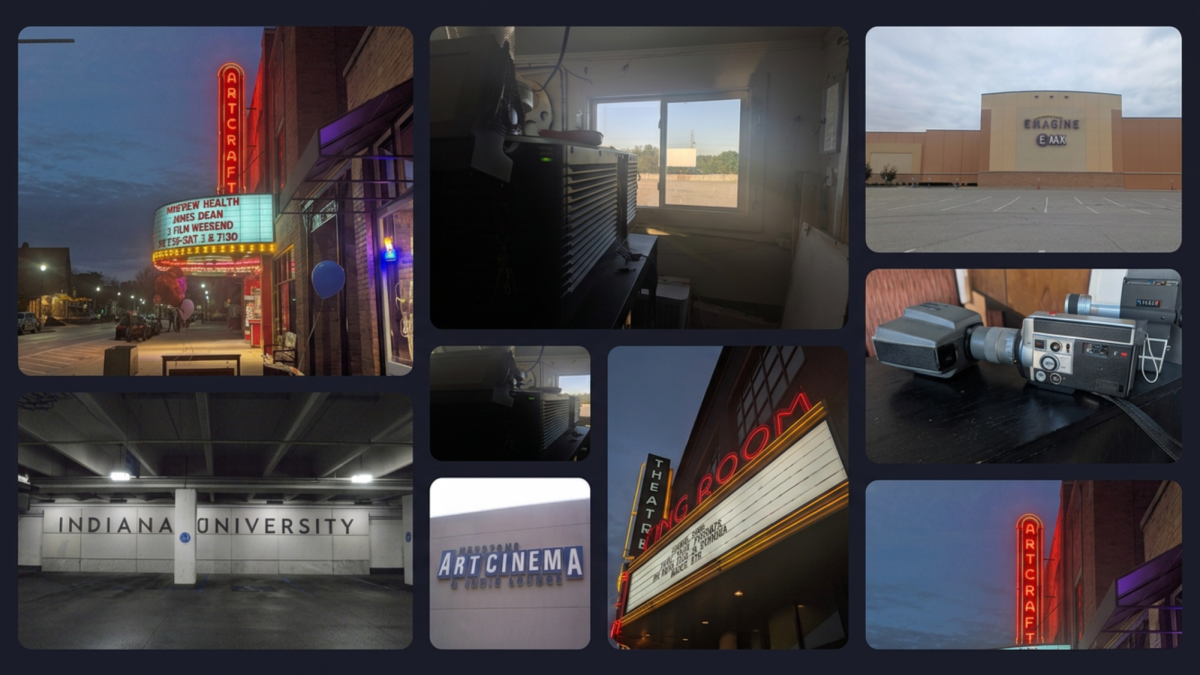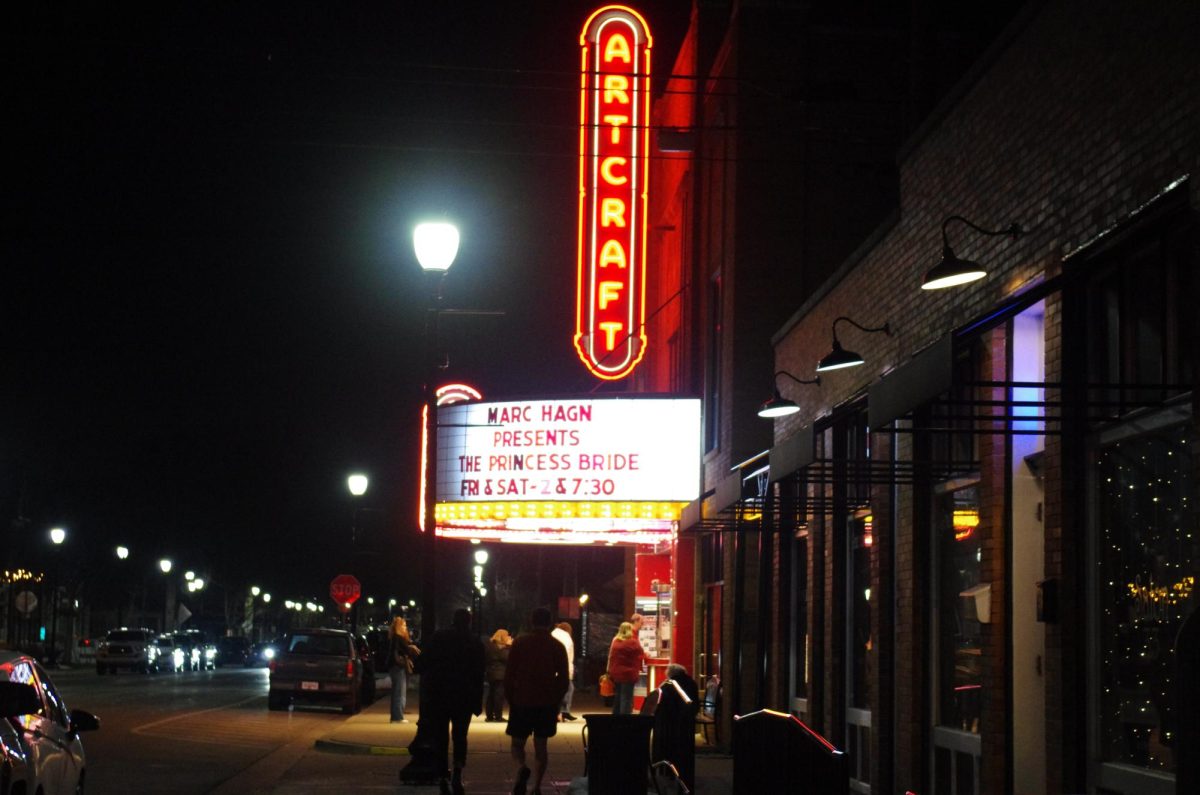
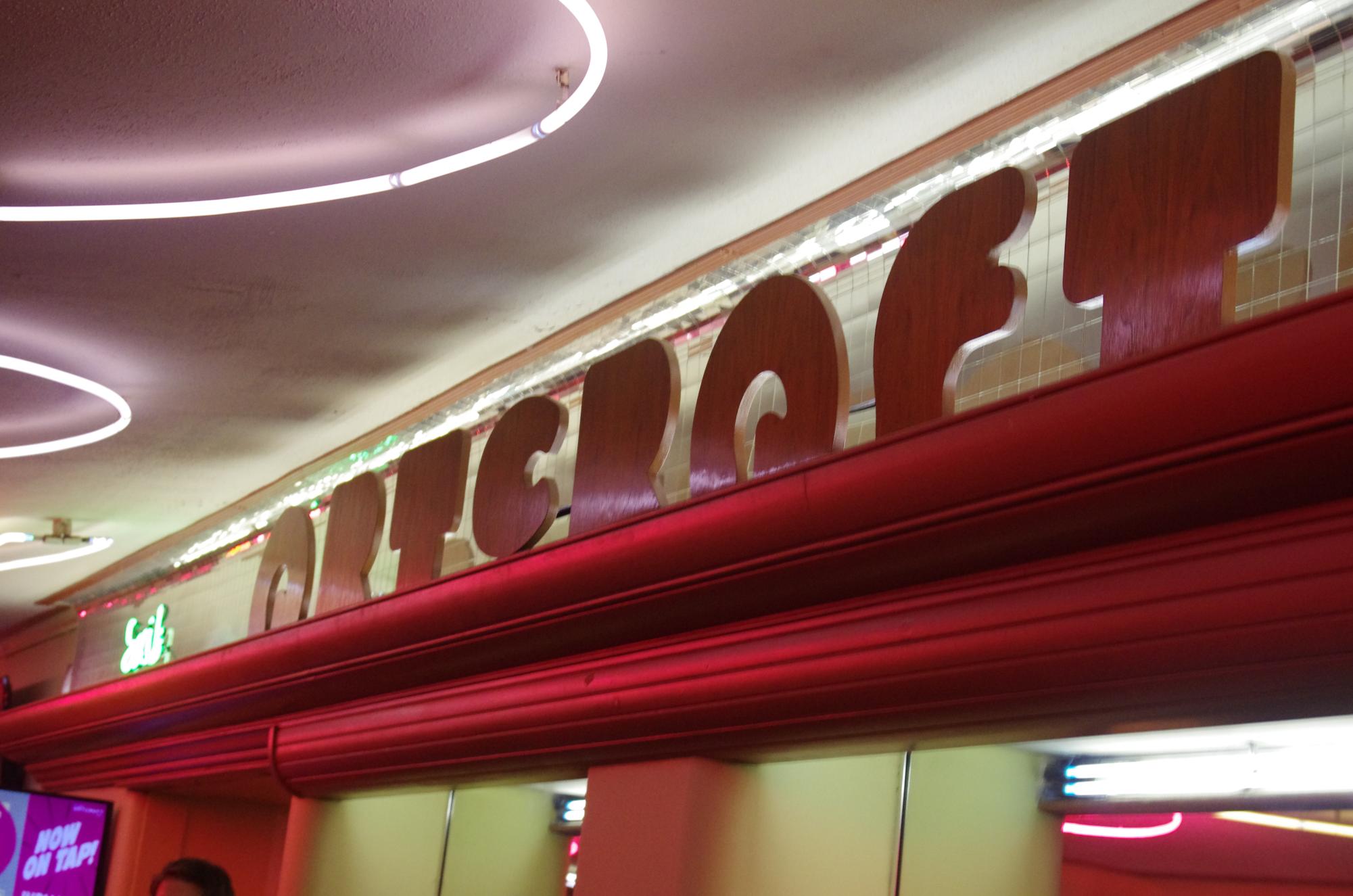
If the walls of the Franklin Historic Artcraft Theatre could talk, they would tell stories all the way back to the roaring ’20s. It is old enough to remember when films did not have sound, and live orchestras would make the music every night and the transition into the talkies where the actors finally began to speak.
The theatre opened Nov. 1, 1922; many knew it as the entertainment of the town. In 1935, the establishment became the first building in Franklin, Indiana to install an air-conditioning system, leading it to be “healthfully cool,” a slogan that the theatre still uses to this day.
For most of the 20th century, the theatre remained popular. The screening of the film “Hoosiers” was notoriously famous in the ’80s since it was an Indiana based film, but in the 2000s, a change occurred. The Rembusch family, who had owned the place since the ’20s, sold it to Bob Schofield. Schofield led to the theatre ceiling crashing down during a live stage concert he was holding to reinvigorate the theatre. When too many people were dancing, the music was too loud which caused the city to condemn it for destruction.
Franklin Heritage Inc. (FHI), a group started by citizens in the ’80s to help preserve the beauty of Franklin’s architecture, decided to step in, buying the theatre in 2004 after its longest board meeting ever.
“Ever since then, the Artcraft has been a big bulk of what Franklin Heritage does,” director of film George Chimples explained. “We are operating it according to historic preservation principles where we are trying to restore the theater to what it looked back in the 1940s. We are trying to preserve the film’s operation, the 35-millimeter film operation for that kind of projection capability, and so we have different goals because some other historic theaters are purely organizations.”
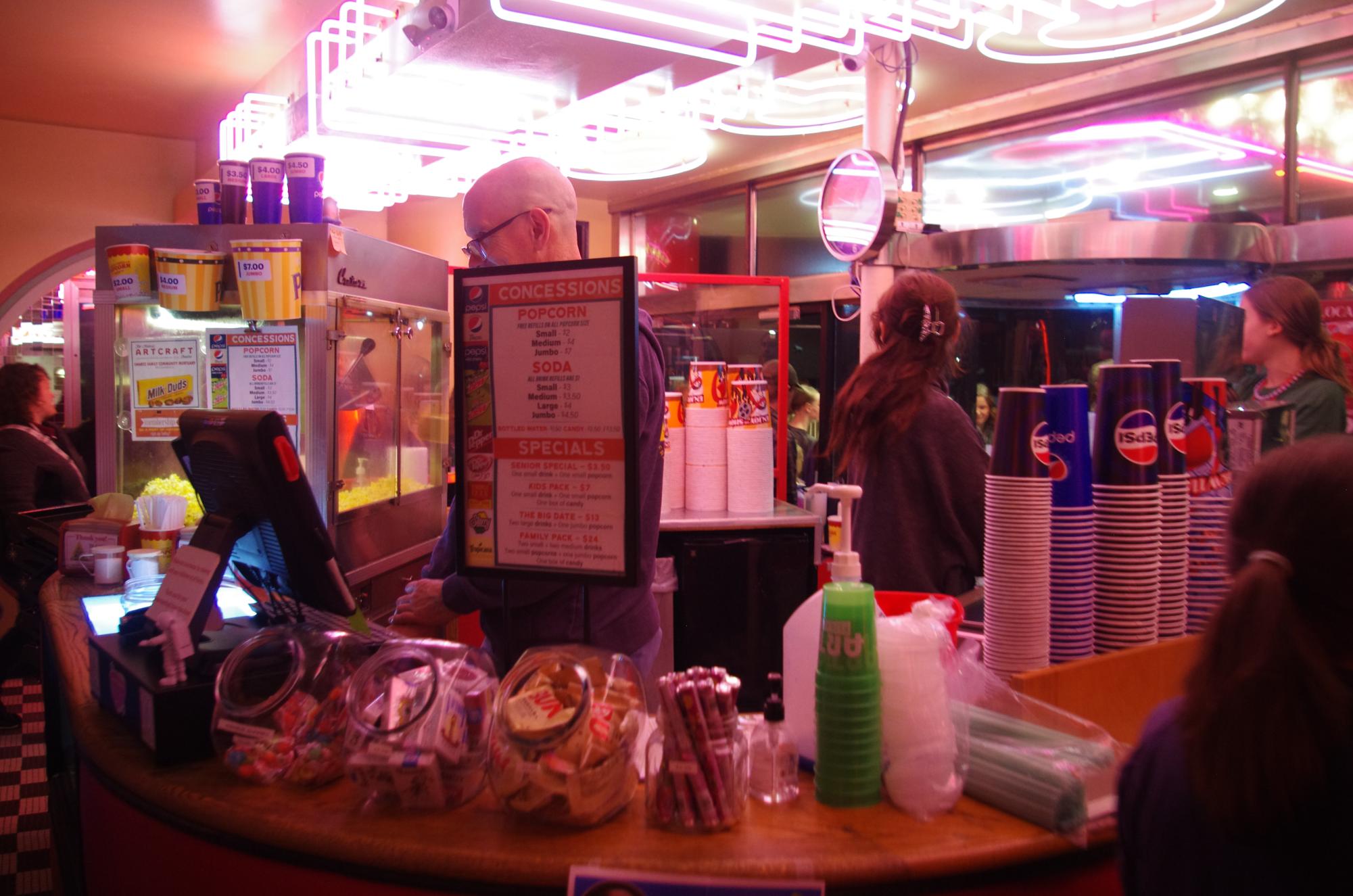
The Historic Artcraft Theatre is one of two theaters capable of running 35mm film in Indiana, but the only one that mainly runs film. Films such as “Jurassic Park,” “In a Violent Nature” and “The Red Shoes” used this film format to get precise colors. When watching a 35mm print you are also fully watching the director’s vision because the print cannot be changed after being made unlike streaming where companies can edit the film such as “Selma” where Amazon edited out the FBI watching Dr. King because it was “anti government.”
“I think it was 2012, I want to say the movie industry sort of switched wholesale to Digital Cinema Packages (DCP), digital projectors, and moved away from 35mm film, but we do not really have space for a DCP thing in there,” Chimples continued. “We just kind of kept doing it the old way, and we are dedicated to it as being a primary form of projection and also trying to keep the art form and the skill set of projection alive.”
There is a lot of work that can go into running film compared to digital because of how different the two formats are.
“Running on film, Projectionists have to have an understanding of it, such as the kind of lenses they have for the kind of film stock they are getting for, you know, if something was shot on Cinemascope versus another kind of format,” Chimples explained. “You need a different kind of lens for that to get it to show up on the screen correctly. We get audio, but some of our prints are older, so I might just have a mono track. It might be Dolby Digital. It might have all sorts of different audio things that have to be figured out.”
The projectionist’s job is a lot more than just figuring out the format but also examining the film itself before they can screen it such as cleaning it or seeing if there are holes in it.
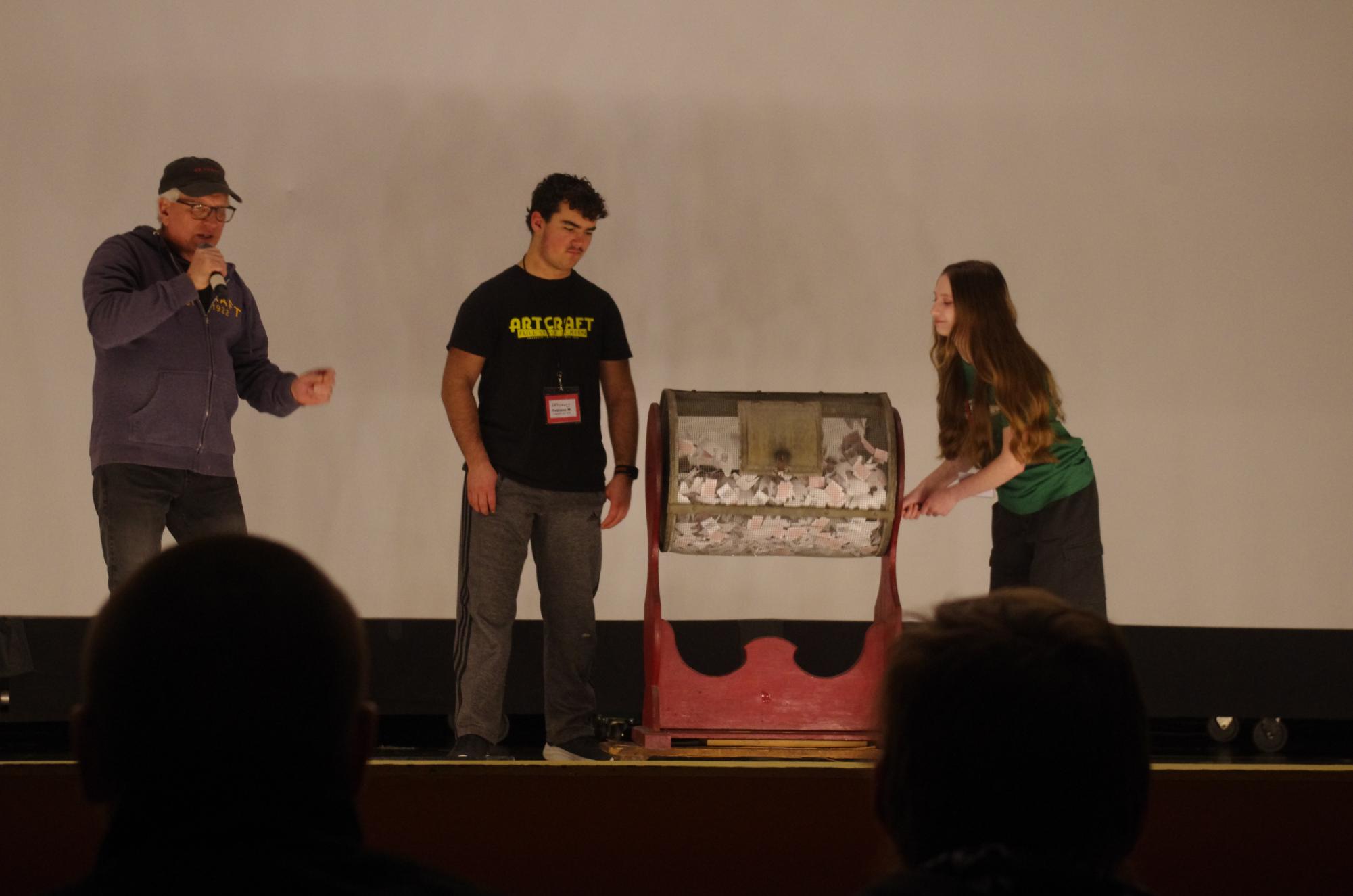
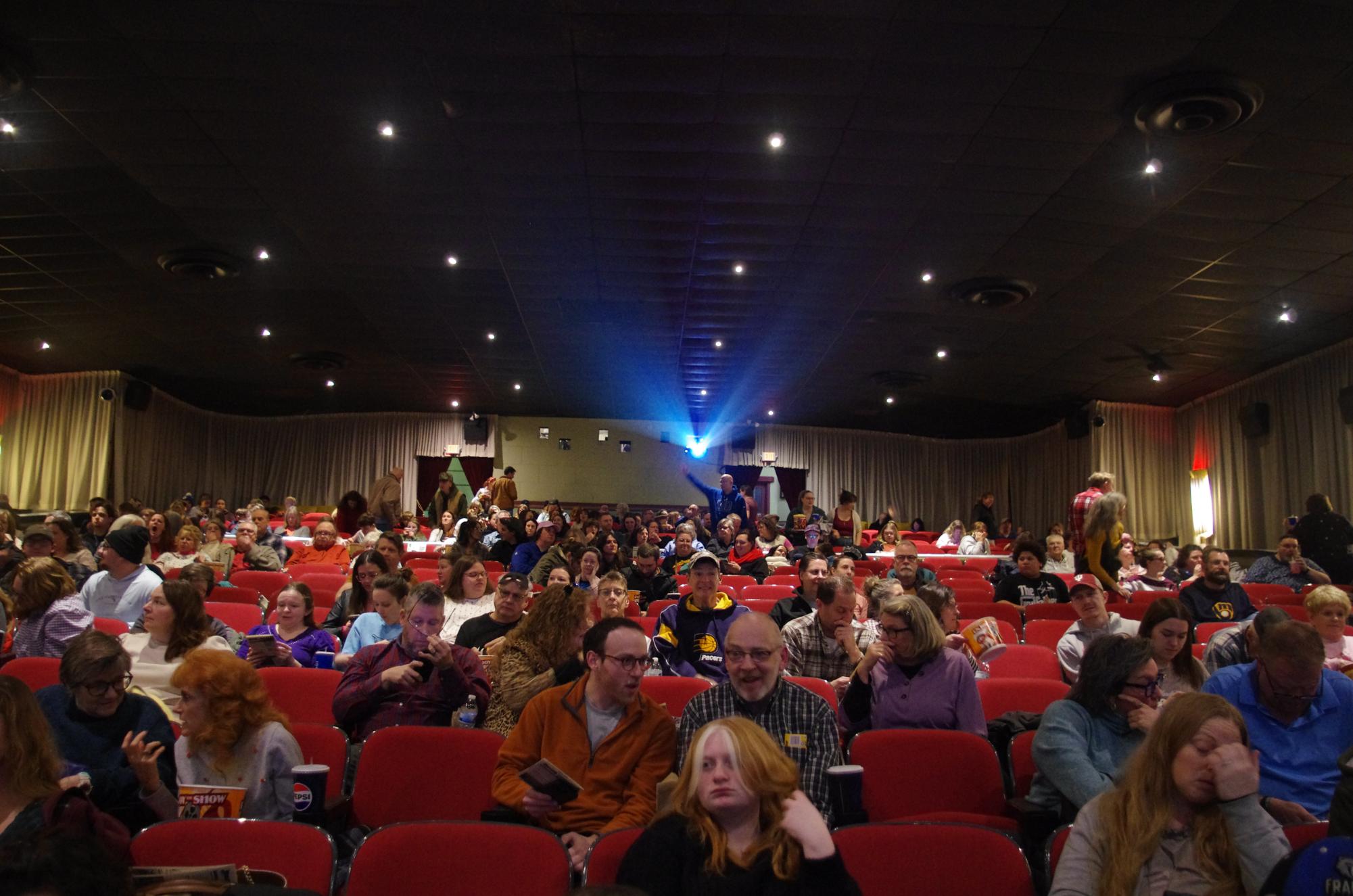
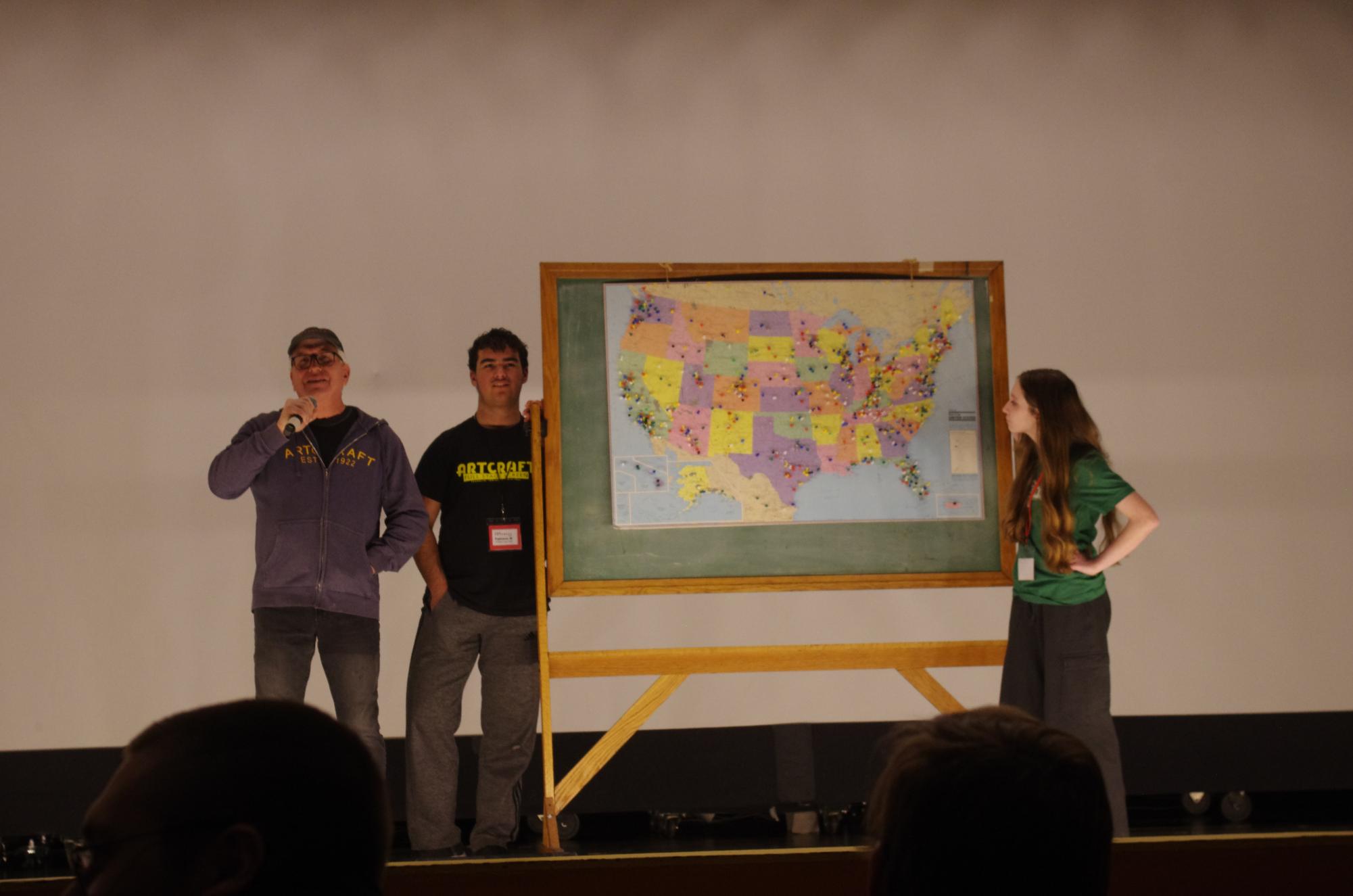
Martin Biewlaski with a raffle wheel it is rumored that if you stare into too long you will be “mesmerized” A volunteer behind the concessions on Feb. 14. Photo by Evelyn Rose.
“[film prints] come in different sorts of conditions, so the projectionists have to work them up,” Chimples continued. “First, they have to splice the reels together because prints get shipped differently than you exhibit them. Then they have to work the prints up and put them together. It is a physical, tactile nuts-and-bolts kind of project that requires a lot of experience and a lot of know-how to really do it the right way, whereas on the digital side you are dealing with software and hardware, and so there is a lot of technical knowledge.”
The future of continuing to run 35mm films comes with the passing of knowledge between projectionists.
“For a long time, we just had one projectionist,” Chimples said. “We have got a couple more there now and can pass along that knowledge because a lot of the film projection was in danger of being lost. There are a lot of people when we go to film conferences, people are interested in running films again, and people have recognized that it is a special thing to be able to see a movie on film. There is going to be a flourishing of film projection occurring because there are a lot of young people that are really interested in it, and we see ourselves as trying to keep it alive to pass it on to the next generation.”
This trend has also been seen in certain filmmakers such as “Twisters,” (2024) “Jurassic World Rebirth” (2025) and “Marty Supreme” all films which have over an $80 million budget.
As the next generation, you can celebrate National 35mm Day by attending the showing of “Black Orpheus” originally scheduled for March 5 but is now March 25, where tickets will be $3.50 with locally grown, internationally known popcorn for $2 to $7.