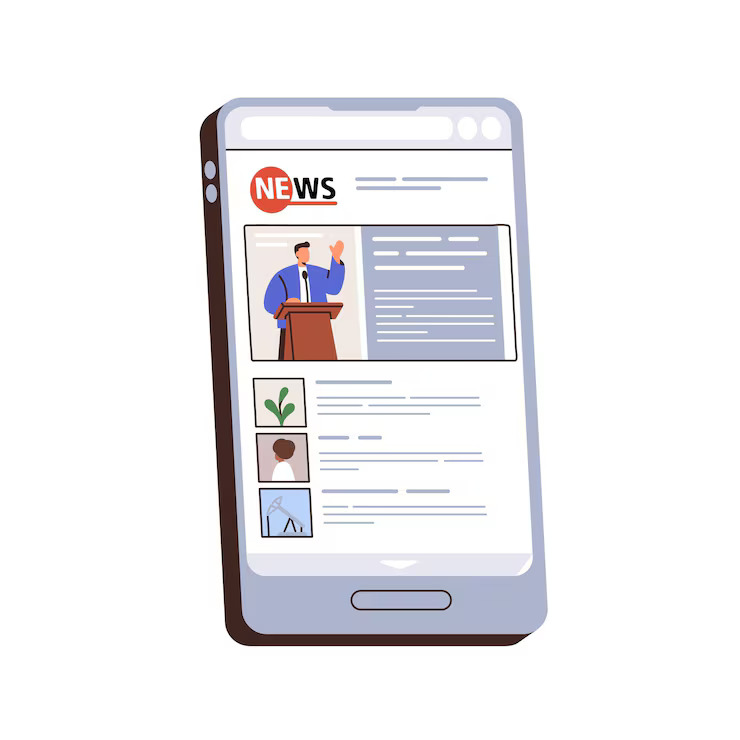
Imagine you see a headline so shocking, you just have to repost it to your Instagram story. What if that headline was false or misleading? Spreading that story could potentially have unintended consequences. The internet has made it very easy to stay on top of everything that goes on in the world, it has also made it very easy for misinformation to spread. While misinformation can be spread with malicious intent, this is not always the case. Sometimes, outdated info gets reported, or the speed of algorithms blows fake stories up. However, even if it was not meant to, it can still be harmful.
This is especially true on social media sites, such as Facebook, Instagram and X, where there is little in terms of consistent moderation and fact checking. The easiest way to avoid falling for this misinformation is by practicing media literacy. The National Association for Media Literacy Education (NAMLE) defines media literacy as “The ability to encode and decode the symbols transmitted via media and synthesize, analyze and produce mediated messages.” This essentially means that someone who is media literate can analyze presented information, and decide what is being stated and if it is reliable. Media literacy is a skill, and like many skills, anyone can learn to do it with practice.
While that may seem like a daunting task, the internet makes it pretty simple to verify information. There are many free resources available, for instance, Ad Fontes Media Bias Chart. This chart shows a wide variety of sources ranging from news organizations to podcasts across the political spectrum. It then takes each source, and after using a panel of evaluators from different political backgrounds, places it in correspondence with its overall leaning and reliability.
Another easy way to avoid falling for misinformation is the practice of fact checking. This can be done with a resource like FactCheck.org, but it is also really easy to do without a new website. According to the Macdonald-Kelce Library at the University of Tampa, it is important to examine the credentials of a source, check for any bias, and look for other reporting by the source. Another easy step you can take is to search for other articles about the claim, or, if possible, primary sources and original documents. If there are not any, or if they are all from sources that appear unofficial, approach with skepticism and continue to monitor for developments.
Misinformation often spreads when information is shared quickly and without context, while accurate reporting usually takes time. Although it takes practice, with time, media literacy becomes second nature. It encourages readers to slow down, ask questions, and look for reliable sources before spreading a claim. By doing this, individuals can avoid spreading false information and help make sure everyone knows the facts.